What The Crust
:max_bytes(150000):strip_icc()/homemade-pizza-dough-FT-RECIPE0422-7d3aa2fbd4244e88afaff987753866d6.jpg)
Thick. Thin. Deep-Dish. Stuffed? No, I’m not talking about women. I’m talking about pizza! While I’m far from what many would call a pizza connoisseur, I definitely do enjoy a slice from time to time. Now, everyone knows that pizzas have a near-unlimited amount of customization, whether it’s the variety of toppings, the crust, or even the way it’s cut. The crust, in my opinion, is the most integral part of the pizza. Its role as the foundation is essential to the success and tastiness of the slice. Everyone has different opinions when it comes to pizza crusts, but I’m not here to argue for one crust in particular (thin crust ftw). I’m here to enjoy and appreciate all the different types of crust.
First, I’ll clarify what the pizza crust really means for all the pizza noobs. Many might think that the crust only includes the part at the edge, but that’s not all. The pizza crust is the entire bottom layer of the pizza that contains ingredients. Essentially, it’s what the dough becomes when it’s baked.
From what I understand, there isn’t really an “original” crust pizza. In the annals of history, an original crust pizza is very similar to focaccia. While some restaurants may have an original crust on their menu, it’s usually a simple thick crust. The dough of a thick-crust pizza is thicker than a thin crust, especially around the edges. That’s what gives the pizza the poofiness that many are used to. The thick crust offers a chewier and more substantial bite that’s often more rich than other crusts. They also allow for one to load more toppings simply because it’s able to hold up better. However, they do take longer to bake, and it’s usually more difficult to ensure evenness and completion. Additionally, thick-crust pizzas can easily overpower their toppings with too much dough in one bite. Be wary!

Onto thin-crust pizzas. My love and joy. No bias here though. Thin crust pizzas are thinner... While thick crusts usually rise along the edges, thin crusts usually have the same thickness from centre to edge. These crusts provide a lighter, less doughy eating experience and are commonly found in New York style pizzas. The crispiness and crunch that thin crusts provide are unmatched and unparalleled. Another bonus is that it has lighter nutritional stats compared to a thick crust (it’s thinner!). Unfortunately, the thin crust does have some negatives. It’s common for these pizzas to sag when picked up, which may cause toppings and sauce to dirty your clothes. On top of that, it’s less capable of holding as many toppings as thick-crust pizzas.
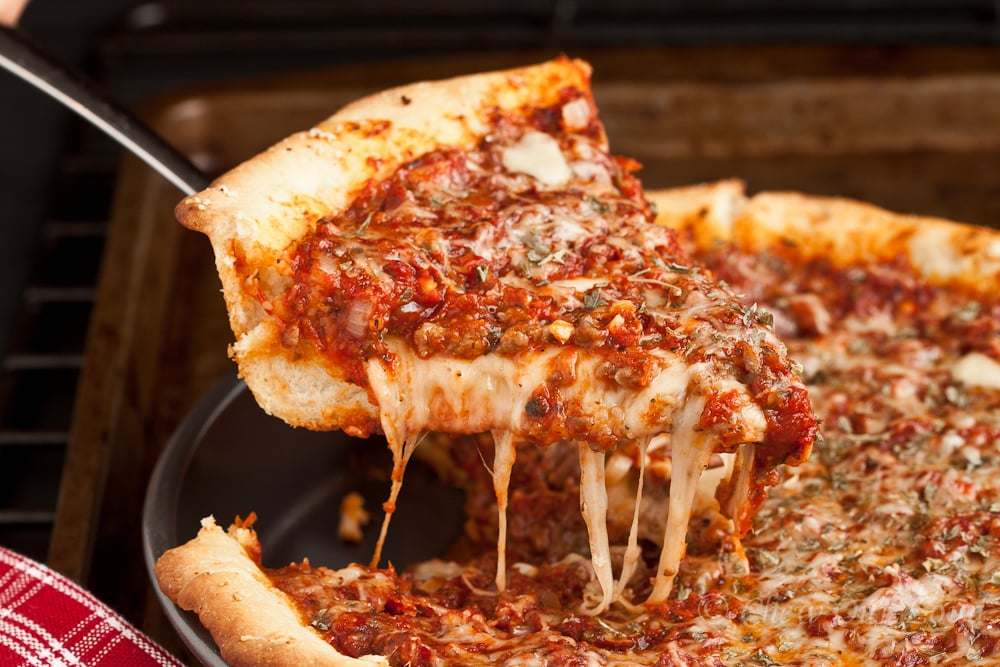
Stuffed crust pizzas are very similar to thick crusts apart from one thing. They’re stuffed. Boring. So, the last crust I've picked is deep-dish. I don’t really know if it counts as a crust, but it’s definitely different. I’ve never had one of these before (sorry Little Caesars), and I don’t really know if I want to try one. A deep-dish pizza is a thick pizza baked in a pan layered with lots of fillings, kind of like lasagna. The crust is very deep, which creates a bulky pizza, and is usually thick as it must contain all the fillings. I can’t comment too much on deep-dish as I've never had it in my life, but I'd assume it’s a very rich and filling slice.
These 3 crusts are nowhere near all the possibilities for a pizza crust. A pizza crust can really be anything; these are just some of the more traditional options. I’ve seen pizza made from focaccia, sourdough, and so many other things. There’s an endless amount of mix and match available when it comes to pizza. It’s all about determining what best suits your tastebuds.
Thanks so much for reading, and I'll see you guys on the next one!