The Evolution of Street Food
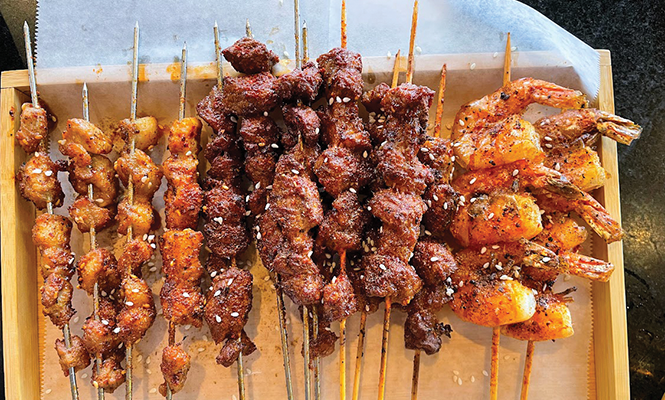
Whether in the bustling alleys of Singapore, the concrete jungle of New York, or the vibrant streets of India, you’ll always see hawker stalls, food carts and street vendors throughout. Street food is a staple of any city and supports the people of the city in various ways. Not only does it provide a meal that’s affordable, available, and filling, but it also gives one the opportunity to taste the cuisine of a country from across the world, often in its realest form. Street food has evolved from a way to feed the working class into a global phenom.

To understand the workings of street food, we must start from the beginning. The first dealings of street food started a loooong time ago, around 1200 BC, when Egyptians were able to buy flatbread from stalls on the street. Shoutout, Mohammed Salah. Interestingly, in the present, flatbreads, naans, rotis, and tortillas are all fundamentals of street food. As we fast forward many years, an important concept arises that fuels street food for the next centuries. Alexandria was one of the first rapidly growing and expanding cities. As the city grew, so did the need to feed the population. Hungry citizens = mad citizens = revolt. Thus, there was documentation that fish was fried and sold on the streets of the city.

A similar concept applied to the Romans when they took control of Alexandria. Often, Roman citizens didn’t have the means to cook their own food, so they had to buy cooked food from the streets. This led to the creation of “thermolopia,” shops that sold a variety of cooked foods, which allowed people to eat whenever and wherever they wanted. The thermolopia was the first of its kind, and it paved the way for street food today. Remains of the thermolopia can be found at Herculaneum and Pompei.
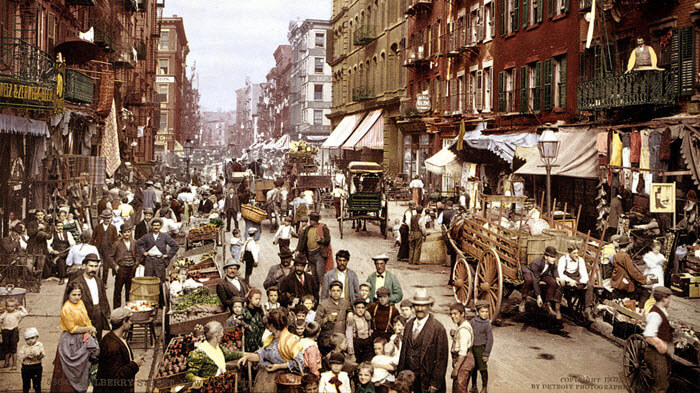
As this trend of megacities continues, we land in semi-present-day London and New York. In the late 1800’s and early 1900’s, the populations of these cities skyrocketed. Similar to the Romans, people moved into buildings with no gardening areas or kitchens, but they still needed to be fed. As a result, street food once again rose in prominence in both areas, providing the perfect solution to any problems. However, it wasn’t smooth sailing for street food from there on out. In London, street food became associated with the working class, and being seen eating it often meant you were poor. In New York, Mayor LaGuardia thought that street vendors were a threat to urbanization and wanted to move all the carts indoors. Street food died down for a bit, but it saw a rise in popularity in just a few decades.
Because of the 2008 Global Financial Meltdown, restaurants, like every other market, were hit. This left talented chefs unemployed, and what did they do? They cooked, not in restaurants, but on the street. The culinary might of these chefs was on full display, and with the help of social media, street food began to reemerge across the world.

Now, over 2.5 billion people eat street food daily, and it’s become one of the largest markets of the food industry. Step foot into any major city, and you’ll find vendors selling all kinds of different cuisines and fusion products. That’s what I enjoy the most about street food, how one cart could be selling shawarma and not even 5 metres away, someone’s selling a banh mi. Street food is a testament to the will of the people, whether class or culture, and it brings cities together in the form of festivals and markets. Some countries have signature street food dishes, such as Thailand’s sticky rice, Singapore’s chili crab (featured in Crazy Rich Asians), or South Korea’s kimbap. Other vendors love to fuse cuisines, creating new dishes that combine the distinct flavours of different countries. No matter where you are, street food will always be an amazing way to taste and connect with the culture of a country.
Thanks for reading and stay on the lookout for the next article!